AlcoPass
A connected breathalyzer station built around the C1 device — raw BLE bytes turned into a trustworthy blood-alcohol reading.
The brief
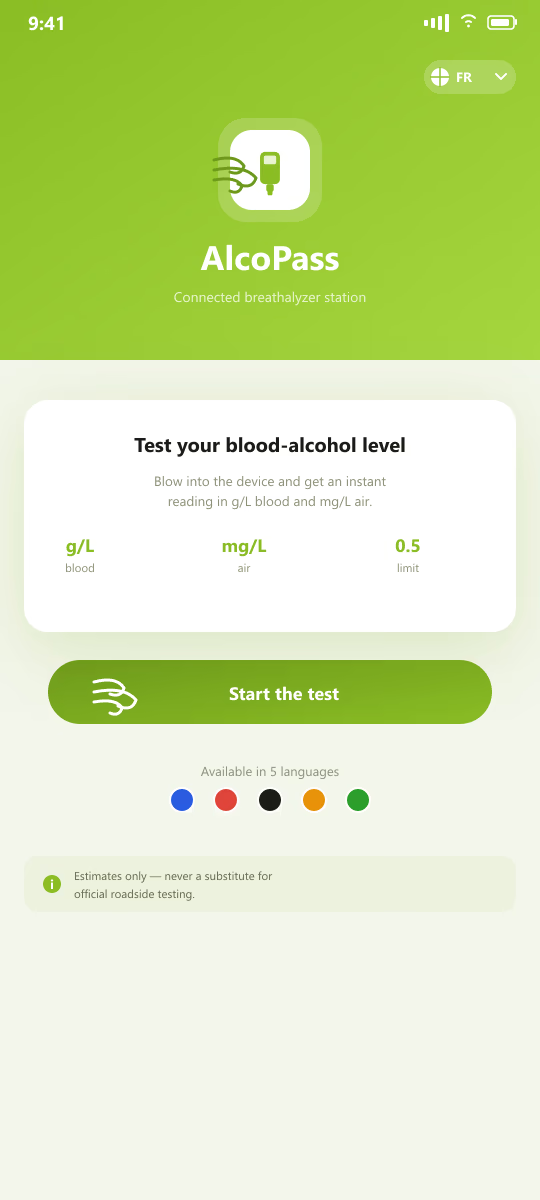
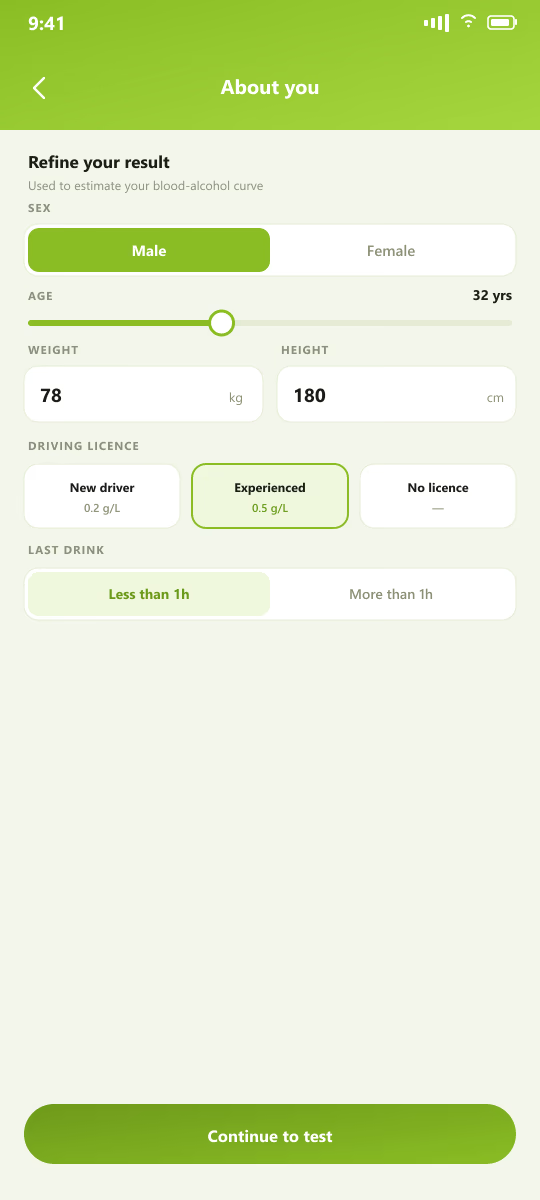
A client in France posted me an actual breathalyzer — the AlcoPass C1 — and asked for an app that turns it into a self-test station for venues: pair, blow, get a blood-alcohol reading before you decide to drive. The stock device firmware was fixed and minimal; he wanted more on top of it — a guided experience, multi-language for EU venues, and settings he could change from a server without shipping a new build.
The screens were never the interesting part. The interesting part was trusting bytes coming off a sensor.
Only talk to the right device
A breathalyzer kiosk can’t show you a list of every phone, watch and earbud in Bluetooth range. Built on universal_ble, the scanner filters by device name — _deviceName = "ALCOPASS", matched with d.name.customContains(...) — so only AlcoPass hardware ever appears to pair. Connection opens the service 0000ffe0-…, subscribes to the status characteristic (0000da01-…), and writes the warm-up command [0x05, 0x05] to the control characteristic to start a test.
The test is a state machine
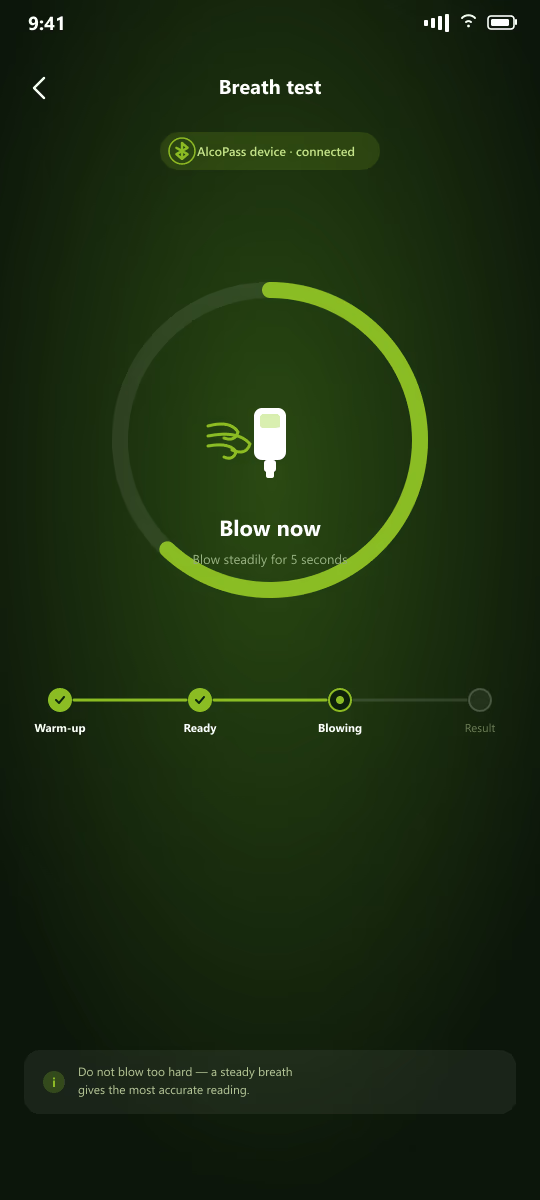
The C1 reports its state one byte at a time, and the app mirrors it as a phase machine — 5 → warming up, 6 → ready to blow, 7 → blowing, 8 → analyzing, 9 → complete — with a 54-second guard so a stalled device fails cleanly instead of hanging the kiosk. The error byte is just as important as the result: blow too weak, blow too strong, warm-up timeout, out of battery each map to a clear instruction, because a confusing failure at a bar is a useless test.
Parsing the breath
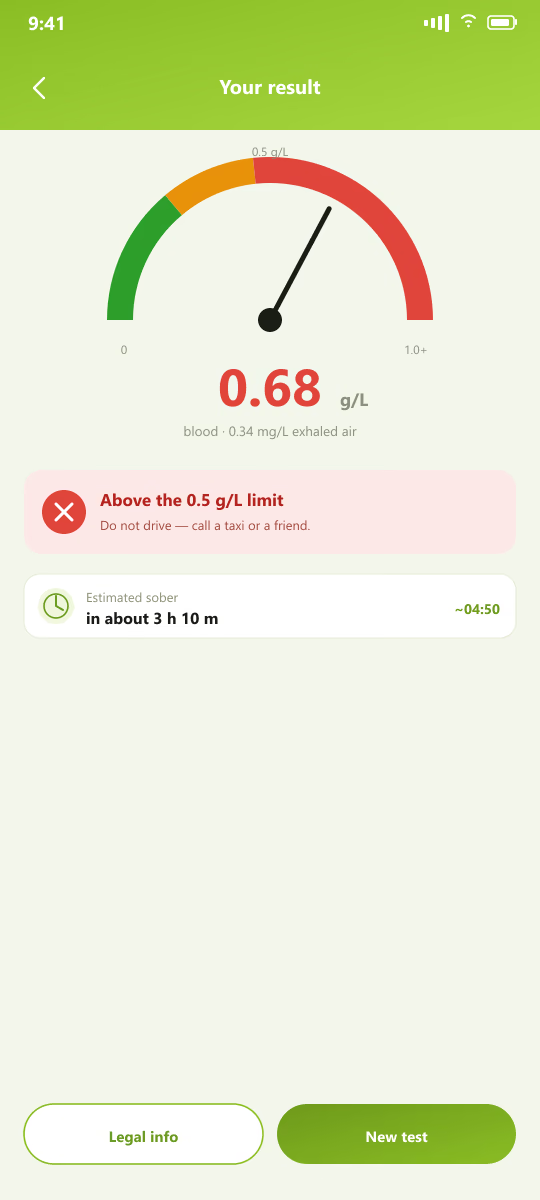
Every reading is a 16-byte frame, and getting the math exactly right is the product. The blood-alcohol density lives in bytes 13–14 as a 16-bit value; concatenate them, divide by 10000 for a percentage, then:
- Blood —
g/L = density × 10 - Exhaled air —
mg/L = g/L × coefficient
Other bytes carry battery level, test count, the unit’s calibration date and a warm-up timer — all surfaced so the station stays honest about whether it’s fit to measure. There’s no rounding-away of the hard cases; a reading is only shown when the device says the blow was valid.
Server-controlled, multi-country
Configuration and content are driven from Firestore, so the operator can tune the station without an app update, and every blow is written to a logs collection — phase, BAC, device id, raw frame, server timestamp — for traceability. The UI is fully localized with easy_localization across five languages (French, English, German, Spanish, Italian) for cross-border venue use.
Where it stands
I built and delivered the app around the hardware the client provided; he rebranded it before its public launch. The takeaway I carry from it: hardware integration is a discipline of distrust — you assume the bytes are wrong until the protocol proves them right, and you never paper over an invalid reading to make a nicer screen.